A two-minute refresher on genetics.
Methods, Phase (3)
An open letter to the breeders and distributors.
Download this entire website as a [PDF] document.
If you have gotten this far in the experiment, congratulations, I am very impressed! You have apparently been able to rear two generations of mystery snails and cross them under rather controlled conditions. So (ideally) you now have AaYySs brown/black babies, and ivory aayyss babies to testcross them with. This step cannot be done in mass culture. This must be done pairwise. Let's do it!
(3.1) You can certainly rear both of your batches of baby snails in a single aquarium while they are still juveniles.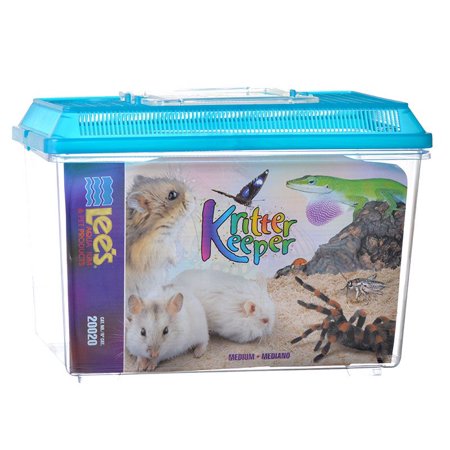
(3.2) I don't know at what age or size maturity occurs. But at some point safely before that, your juvenile snails must be removed from joint culture and paired.
(3.3) Pair single brown/black juveniles with single ivory juveniles, making as many pairs as you've got vessels to keep them in.
(3.4) Again, I'm not trying to tell you how to do your job, but from a practical standpoint, you will probably want smaller aquaria, like those one-gallon critter keepers I mentioned in Phase II.
(3.5) Rear pairs to adulthood, replacing (or combining) parents as necessitated by mortality.
(3.6) Remove egg masses laid using the techniques outlined in step (1.2). Record the phenotype of the mother, if you can catch her in the act.
(3.7) But wait. Even in the best of all possible scenarios (a 50:50 sex ratio, everybody mature and healthy) only half of those pairs will be male x female. Which means that at least 50% of your pairs will not have yielded offspring.
(3.2) I don't know at what age or size maturity occurs. But at some point safely before that, your juvenile snails must be removed from joint culture and paired.
(3.3) Pair single brown/black juveniles with single ivory juveniles, making as many pairs as you've got vessels to keep them in.
(3.4) Again, I'm not trying to tell you how to do your job, but from a practical standpoint, you will probably want smaller aquaria, like those one-gallon critter keepers I mentioned in Phase II.
(3.5) Rear pairs to adulthood, replacing (or combining) parents as necessitated by mortality.
(3.6) Remove egg masses laid using the techniques outlined in step (1.2). Record the phenotype of the mother, if you can catch her in the act.
(3.7) But wait. Even in the best of all possible scenarios (a 50:50 sex ratio, everybody mature and healthy) only half of those pairs will be male x female. Which means that at least 50% of your pairs will not have yielded offspring.
- Maybe you can sex them at this point, and swap them around accordingly?
- Or just swap partners randomly, true by phenotype, of course.
(3.8) Count and score all the juveniles born from any successful Phase 3 cross you are able to complete and report those results to me, using the technique outlined in Phase I steps 1.3 - 1.5.
If we get all the way to the end of this entire experiment together, we will have completed a trihybrid test cross, one of the classic experiments of 20th century genetics. Learn more [here]. In addition to confirming the hypothesis as outlined on this website, we will be able to detect linkage among our three loci, if it occurs. Well done, laurels all 'round! Nobel prizes in malacology are awarded annually on December 10. Go ahead and buy your ticket to Stockholm.